1- The area to the right of the ruler, and above shows the area of further excavation, that exposed the Iron age Bovine Humerus shown below.
 2 - This image although poor shows the proximal end of the Humerus before excavation from the lake bed deposits.
 3 - Note how far into the beck bank and the height of the excavation in relation to the normal beck level.
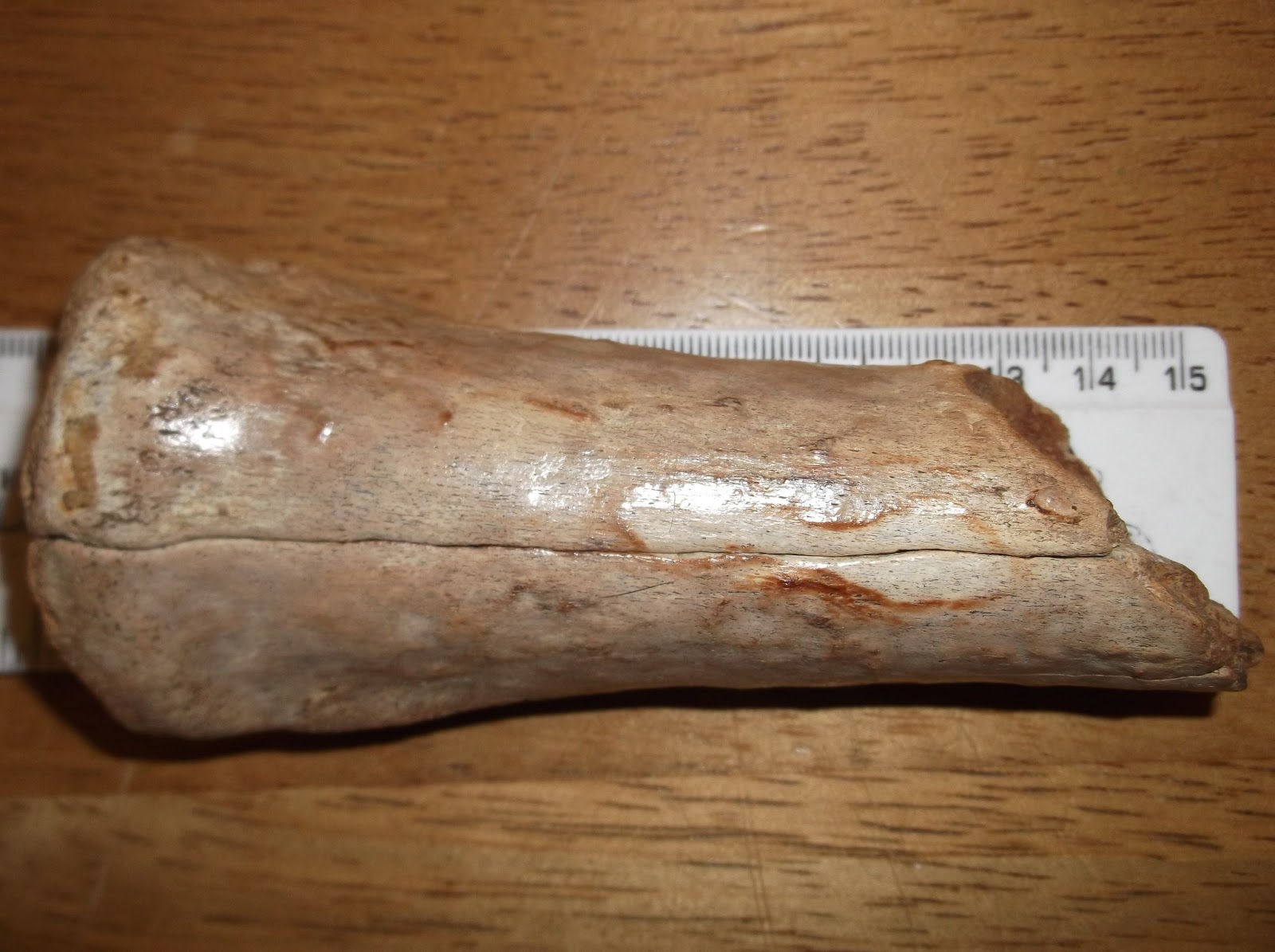
 4 - This is the Humerus washed and dried with only the loose concretions removed.
 5 - Note the preservation something I have tried to explain to many a deaf professional ear, over the last 5 years or more only to be told its just 19th century midden preserved by its watery domain, and I quote a certain professional with these words, I hope she remembers, and now understands that a four hour inspection of a large selection of well preserved Mesolithic and Iron age mammal bones, and carved bone, and stone tools, is so! not enough to send a report back to the finder !
 6 - I have decided to leave the grey concretions attached, as this may help in further investigations into this ancient site, Tees Archaeology are busy at the moment, up on the moors of our neighbour North Yorkshire, the link below shows work in North Yorkshire by Tees Archaeology.
  7 - Note as with all but one bone excavated there are no signs of butchery, so I am starting to believe this was some kind of ritual site.
 8 - This link shows the funded work to the south. - North East Yorkshire Mesolithic Project - Tees Archaeology